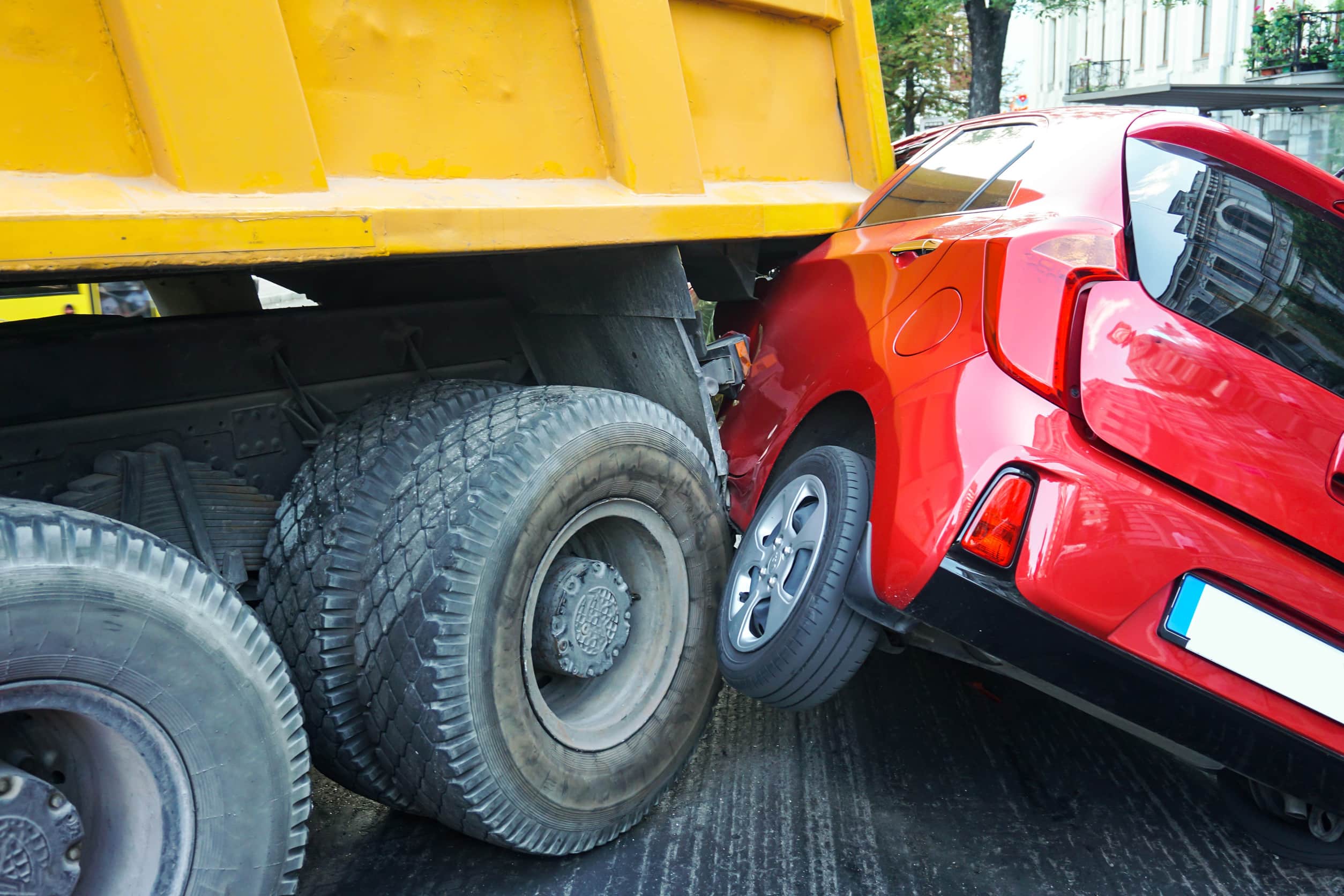

Texas truck accident laws combine federal trucking regulations with state injury law, and the two work together to decide who pays after a crash. Federal rules set safety standards for drivers and carriers, while Texas law controls how fault is assigned, what you can recover, and how long you have to file a claim. Understanding both sides gives you a real picture of where you stand after a wreck with an 18-wheeler or commercial vehicle.
Texas sees more large truck traffic than almost any other state, and that traffic runs straight through Dallas, Carrollton, and the surrounding communities every day. When a fully loaded semi weighing up to 80,000 pounds collides with a passenger car, the damage is rarely minor.
What Federal Regulations Govern Truck Drivers?
Federal Motor Carrier Safety Administration (FMCSA) rules set the baseline for how commercial trucks operate anywhere in the country, including Texas. These regulations cover driver qualifications, hours behind the wheel, vehicle maintenance, and drug testing. Any trucking company operating in Texas has to follow them on top of ordinary state traffic laws.
The FMCSA sets hours-of-service limits that restrict how long a driver can be on the road without rest. Most drivers hauling cargo can drive a maximum of 11 hours after 10 consecutive hours off duty, and they cannot drive past the 14th hour after coming on duty that day. These limits exist because a fatigued driver behind an 18-wheeler is far more dangerous than a fatigued driver in a passenger car.
Trucking companies also have to verify that their drivers meet specific qualification standards before putting them behind the wheel, including licensing history, medical certification, and road test results. When a company skips these steps and hires someone who should never have been driving a commercial truck, that failure can become part of the case against them.
Maintenance is another area federal law takes seriously. Carriers must inspect, repair, and maintain their fleets on a regular schedule. A blown tire, failed brakes, or faulty steering component often traces back to a company that ignored known problems.
How Does a Federal Violation Affect a Texas Claim?
A violation of an FMCSA regulation can serve as strong evidence of negligence under Texas law, even though the federal rule itself doesn’t create a lawsuit on its own. Texas courts recognize this concept as negligence per se, meaning that breaking a safety regulation designed to prevent the type of harm that occurred can help establish that the driver or company acted carelessly.
This matters because commercial truck cases involve a layer of proof that ordinary car accidents don’t. In a typical two-car wreck, you generally need to show the other driver breached a normal duty of care. In a truck case, you also have a detailed set of federal standards the driver and company were supposed to follow, and any gap between what the rule required and what actually happened becomes part of your evidence.
Electronic logging devices, often called black boxes, add another layer. These devices track a truck’s speed, braking, and hours of operation, revealing whether a driver was fatigued, speeding, or otherwise violating hours-of-service rules at the time of the crash. Because carriers only have to keep certain records for a limited time, moving quickly after a wreck to preserve this data can make a real difference in how a truck accident case comes together.
Who Can Be Held Responsible for a Truck Wreck?
More than one party can share liability in a Texas truck accident, and it often extends beyond the driver alone. The trucking company itself can be held responsible under a legal theory called respondeat superior, which holds an employer accountable for the actions of an employee acting within the scope of their job.
Trucking companies frequently try to classify drivers as independent contractors to limit their own exposure. Texas courts look past that label and examine the actual working relationship. If the company controlled the driver’s routes, schedule, equipment, or dispatch instructions, that level of control can support a claim against the company itself, regardless of how the paperwork was written.
Negligent hiring and negligent retention are separate theories worth understanding. If a company hired a driver with a history of safety violations or a disqualifying medical condition, or kept that driver on staff after learning about serious problems, the company can be held liable for its own carelessness in addition to the driver’s actions. This is one reason a commercial vehicle accident often involves more investigation than a standard car wreck.
Depending on the facts, liability can also extend to a maintenance contractor, a cargo loading company if improperly secured freight caused the crash, or a parts manufacturer if a defective component played a role. Each of these parties may carry separate insurance coverage, which matters when damages exceed what a single policy can cover.
What Are the Insurance Requirements for Commercial Trucks?
Federal law requires most commercial trucks operating in interstate commerce to carry a minimum of $750,000 in liability insurance, with that number rising to as much as $5 million for trucks hauling hazardous materials. This is significantly higher than the minimum coverage required for a standard passenger vehicle in Texas, and for good reason. Crashes involving vehicles of this size tend to cause more severe injuries and higher medical costs.
Many large carriers also carry umbrella or excess policies that sit on top of their base coverage. Regulators have flagged that even these higher minimums haven’t kept pace with the rising cost of catastrophic injuries, which means the trucking company’s stated minimum coverage isn’t always the full picture.
How Does Texas Determine Fault in a Truck Accident?
Texas uses a modified comparative negligence system, sometimes called the 51 percent bar rule, to decide how much of a claim you can recover. Under Texas Civil Practice and Remedies Code Section 33.001, you can still recover damages if you’re found to be 50 percent or less at fault for the crash, but your compensation gets reduced by your percentage of responsibility.
If you’re found to be 51 percent or more at fault, Texas law bars you from recovering anything, regardless of how serious your injuries are or how much the other party contributed to the crash.
For example, if a jury awards $500,000 in damages but finds you 20 percent at fault, your recovery drops to $400,000. If that number shifts to 51 percent, you recover nothing at all. This is why fault percentages get contested so heavily, and why insurance adjusters often try to push blame back onto the injured person early in the process.
Texas law also allows for joint and several liability under certain conditions. If a defendant, such as a trucking company, is found more than 50 percent responsible, that defendant can be held liable for the entire judgment, even if other parties share some of the blame and can’t pay their portion. This matters in multi-vehicle wrecks where a commercial carrier with substantial insurance is involved alongside drivers who may have little or no coverage.
What Compensation Can You Recover After a Texas Truck Accident?

Texas law allows injured victims to pursue several categories of damages after a truck wreck, and understanding what’s available helps you recognize when an early settlement offer falls short. Economic damages cover measurable financial losses, including medical bills, future medical care, lost wages, and lost earning capacity if your injuries affect your ability to work going forward.
Non-economic damages account for the harder-to-measure impact of a serious injury, including pain and suffering, physical impairment, disfigurement, and loss of quality of life. These damages don’t come with a receipt attached, which is exactly why insurance companies tend to lowball them in early negotiations. In cases involving a death, Texas wrongful death law allows surviving family members to pursue additional damages tied to the loss of companionship, financial support, and guidance the deceased would have provided.
Commercial truck crashes often involve catastrophic injuries such as spinal cord damage, traumatic brain injuries, or permanent disability. Full recovery generally requires documenting not just what a victim has already spent, but what ongoing care and lost income will look like for years to come.
How Long Do You Have to File a Claim in Texas?
Texas Civil Practice and Remedies Code Section 16.003 sets a two-year statute of limitations for most personal injury lawsuits, including truck accident claims. That clock starts running on the date of the crash, and missing this deadline generally means losing the right to sue, no matter how strong the underlying case might have been.
Two years can feel like plenty of time right after a wreck, but truck accident cases often take longer to investigate than an ordinary car crash. Carriers only have to preserve records like electronic logging data and inspection reports for limited periods, so waiting too long to start gathering evidence can mean losing access to the exact records that would have proven fault.
A handful of exceptions can pause or extend this deadline, such as cases involving a minor. These exceptions are narrow, so filing well within the two-year window keeps every option available.
Frequently Asked Questions
Can I still recover damages if I was partly at fault for the truck accident?
Yes, as long as you’re found 50 percent or less at fault under Texas’s modified comparative negligence rule. Your compensation will be reduced by your percentage of fault, but you won’t be barred from recovering entirely unless you cross the 51 percent threshold.
Is the truck driver always the one held responsible for a crash?
Not necessarily. The trucking company can also be held liable through respondeat superior, negligent hiring, or negligent retention, and other parties like maintenance contractors or freight brokers may share responsibility depending on what caused the crash.
What if the trucking company says an independent contractor was driving, not an employee?
Texas courts look at the actual working relationship rather than the label on paper. If the company controlled the driver’s routes, schedule, or equipment, that level of control can still support a claim against the company itself.
How is a truck accident claim different from a regular car accident claim?
Truck accidents involve an added layer of federal safety regulations that don’t apply to standard passenger vehicles, along with higher insurance minimums and often multiple potentially liable parties. Evidence like electronic logging data and driver qualification files also plays a bigger role than in a typical car wreck.
Do I really have only two years to file a claim?
In most cases, yes. Texas Civil Practice and Remedies Code Section 16.003 sets a two-year statute of limitations for personal injury claims from the date of the accident, with only narrow exceptions that extend this window.
Moving Forward After a Texas Truck Accident
Truck accident claims in Texas sit at the intersection of federal safety regulations and state injury law, and both play a role in determining what happened and who pays for it. From hours-of-service violations to comparative negligence percentages to the two-year filing deadline, each piece of the process affects the outcome of a claim.
The Law Office of Dan Moore represents people across Dallas, Carrollton, and the surrounding Texas communities who have been hurt in wrecks involving commercial trucks and 18-wheelers. If you’ve been injured in a truck accident, a free consultation is available any time, day or night, at 888-2-WRECKMAN.